Ethylene Glycol
Ethylene Glycol by Lyotex is a versatile chemical used widely in cleaning and disinfection applications. Its effectiveness and adaptability make it a preferred choice in various industries.
Chemical Properties
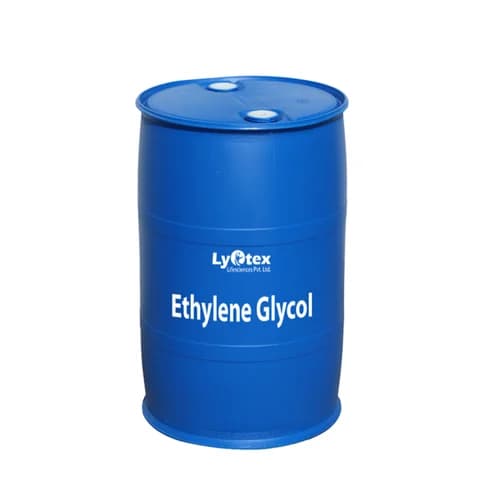
Ethylene Glycol
Brand: Lyotex·Manufactured by: Lyotex Lifesciences Pvt. Ltd.
Ethylene Glycol by Lyotex is a versatile chemical used widely in cleaning and disinfection applications. Its effectiveness and adaptability make it a preferred choice in various industries.
Product Introduction
Ethylene Glycol is a crucial chemical widely utilized in various industrial applications, particularly in coolants and thermoregulation systems. Known for its excellent thermal conductivity and low freezing point, this compound plays a significant role in automotive and industrial cooling systems. Sourced from Kivi Chemicals, Ethylene Glycol is essential for ensuring efficient heat transfer and preventing freezing in extreme conditions. Its applications extend beyond cooling systems, making it a versatile choice for industries such as healthcare, food processing, and automotive cleaning. Kivi Chemicals is committed to providing high-quality Ethylene Glycol to meet the diverse needs of businesses in Kenya, Uganda, Tanzania, and the wider East African region.
Detailed Product Overview
Ethylene Glycol, with the chemical formula C2H6O2, is an industrial-grade compound known for its low toxicity and high boiling point. Its clear, colorless liquid form makes it easy to handle and integrate into various applications. Ethylene Glycol is primarily used as an antifreeze agent in cooling systems due to its ability to lower the freezing point of water, thus preventing ice formation in engines and other machinery. Additionally, it acts as a heat transfer fluid, ensuring efficient thermal management in industrial processes. Kivi Chemicals supplies Ethylene Glycol in compliance with stringent quality standards, making it suitable for a range of applications. The compound is miscible with water, which enhances its effectiveness in various formulations. Its properties, including a boiling point of 197.6 °C and a flash point of 111.0 °C, make it a safe and reliable choice for industrial use. Kivi Chemicals ensures that buyers sourcing Ethylene Glycol can rely on its purity and performance across diverse applications.
Applications & Uses
Automotive Cooling Systems
Ethylene Glycol is widely used as an antifreeze agent in automotive cooling systems. Its low freezing point prevents coolant from freezing in cold temperatures, ensuring that engines operate efficiently and preventing overheating during hot weather.
Industrial Heat Transfer
In industrial settings, Ethylene Glycol serves as an effective heat transfer fluid. It is used in various cooling applications, helping to maintain optimal temperatures in machinery and processes, thus enhancing operational efficiency.
Healthcare Disinfection
Ethylene Glycol is also employed in healthcare settings for disinfection purposes. Its ability to kill bacteria and viruses makes it a valuable component in cleaning solutions used in hospitals and clinics.
Food Processing Sanitation
In the food processing industry, Ethylene Glycol is utilized for sanitation purposes. It helps maintain hygiene standards in food production facilities, ensuring that equipment and surfaces are properly cleaned and disinfected.
Industrial Cleaning Products
Ethylene Glycol is a common ingredient in industrial cleaning products. Its effectiveness in breaking down grime and grease makes it ideal for maintaining cleanliness in manufacturing environments.
Thermal Regulation in HVAC Systems
In heating, ventilation, and air conditioning (HVAC) systems, Ethylene Glycol is used for thermal regulation. It helps maintain consistent temperatures, contributing to energy efficiency and comfort in residential and commercial buildings.
Benefits & Advantages
The use of Ethylene Glycol offers numerous advantages for East African buyers across various industries. Its low freezing point and high boiling point make it an ideal choice for automotive and industrial cooling systems, ensuring optimal performance even in extreme temperatures. By preventing engine overheating and freezing, Ethylene Glycol helps extend the lifespan of machinery and vehicles, reducing maintenance costs for businesses. In addition, its effectiveness as a disinfectant in healthcare and food processing applications helps maintain hygiene standards, further enhancing its value. Buyers sourcing from Kivi Chemicals will benefit from the superior quality and reliability of Ethylene Glycol, which meets stringent regulatory standards. This versatility allows for its application in multiple sectors, making it a cost-effective solution for industrial needs.
Packaging & Bulk Supply
Kivi Chemicals supplies Ethylene Glycol in 25 kg polypropylene bags, ensuring safe and convenient handling for industrial applications. Bulk supply options are also available for larger-scale operations, allowing businesses to efficiently manage their inventory and reduce costs associated with frequent orders.
Storage & Handling
Ethylene Glycol should be stored in a cool, dry place away from direct sunlight and sources of ignition. It is essential to keep the container tightly closed when not in use to prevent contamination. Ensure that storage areas are well-ventilated to minimize the accumulation of vapors. When handling Ethylene Glycol, appropriate personal protective equipment (PPE) such as gloves and goggles should be worn to prevent skin and eye contact. In case of spills, absorb the liquid with inert materials and dispose of it in accordance with local regulations.
External References & Further Reading
Technical Specifications
| pH | 6.0 - 8.0 (at 20 °C) |
| Density | 1.1132 g/cm³ |
| Viscosity | 20.1 mPa·s (at 20 °C) |
| Solubility | Miscible with water |
| Flash Point | 111.0 °C |
| Boiling Point | 197.6 °C |
| Melting Point | -12.9 °C |
| Evaporation Rate | 0.11 (butyl acetate=1) |
| Molecular Weight | 62.07 g/mol |
| Refractive Index | 1.431 |
| Thermal Conductivity | 0.202 W/m·K |
| Specific Heat Capacity | 2.43 J/g·K |
Safety & Handling Guidelines
GHS Category 4 – Harmful if swallowed (H302); Signal word: Warning.
Ethylene Glycol is classified as GHS Category 4 – Harmful if swallowed (H302); Signal word: Warning. It is important to avoid ingestion and prolonged skin contact. In case of accidental ingestion, seek medical attention immediately. For skin contact, wash the affected area thoroughly with soap and water. If eye contact occurs, rinse with plenty of water for at least 15 minutes and seek medical attention. Proper handling and storage practices should be observed to mitigate hazards associated with this chemical.
Regulatory Compliance & Standards
Frequently Asked Questions
What is Ethylene Glycol used for?
Ethylene Glycol is primarily used as an antifreeze agent in automotive cooling systems and as a heat transfer fluid in industrial applications.
Is Ethylene Glycol safe to use?
While Ethylene Glycol is effective, it should be handled with care. It is classified as harmful if swallowed and proper safety precautions should be taken.
How should Ethylene Glycol be stored?
Ethylene Glycol should be stored in a cool, dry place, away from direct sunlight and sources of ignition, with containers tightly closed.
Can Ethylene Glycol be used in food processing?
Yes, Ethylene Glycol is used in food processing for sanitation purposes, but it must comply with local regulations for safe use.
What are the physical properties of Ethylene Glycol?
Ethylene Glycol is a clear, colorless liquid with a density of 1.1132 g/cm³, a boiling point of 197.6 °C, and a melting point of -12.9 °C.
How does Ethylene Glycol work as a coolant?
Ethylene Glycol lowers the freezing point of water, preventing ice formation, and enhances heat transfer efficiency in cooling systems.
What personal protective equipment is recommended when handling Ethylene Glycol?
It is recommended to wear gloves and goggles to avoid skin and eye contact when handling Ethylene Glycol.
What should I do in case of a spill?
In case of a spill, absorb the liquid with inert materials and dispose of it according to local regulations.